Marc Benioff Warns of a ‘SaaS Apocalypse’. Here Are 5 Big Announcements From Dreamforce 2026
Marc Benioff Warns of a ‘SaaS Apocalypse’. Here Are 5 Salesforce Bets on What Comes Next

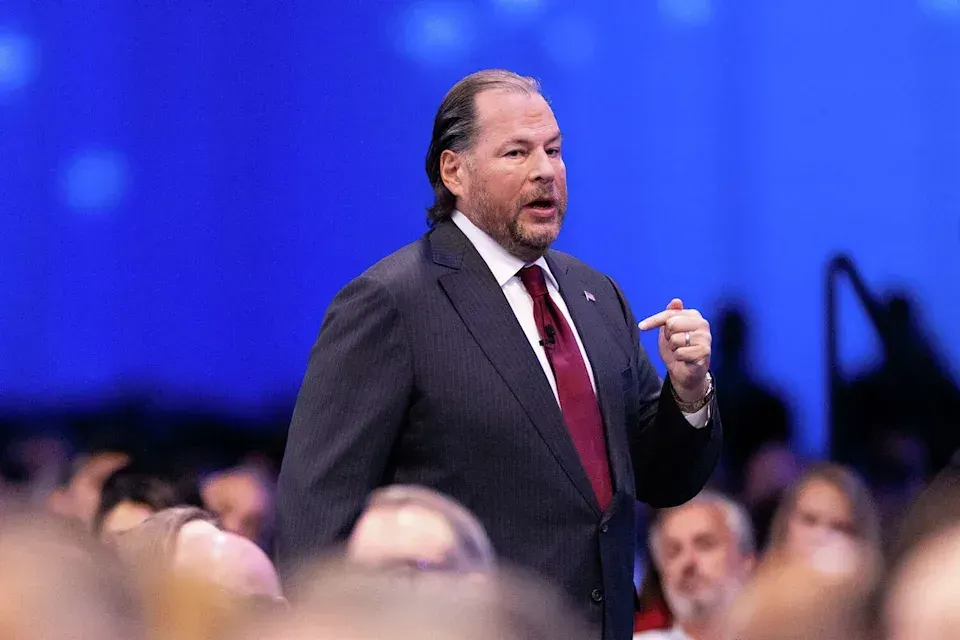
At Dreamforce 2026, Salesforce CEO Marc Benioff did not sound like a CEO defending the future of traditional SaaS (Software-as-a-Service). He sounded like someone preparing for its disruption.
In his keynote, Benioff warned of a “SaaS apocalypse” as AI agents begin to change how software is built, accessed and used inside enterprises.
“SaaS apocalypse was not about the end of software, but it may be about the end of software that makes humans do all the work,” he said.
As AI agents take on more work, the way people interact with enterprise software is changing, putting pressure on the traditional model where employees log into applications, search for information and manually complete workflows.
Rather than treating AI as another feature layered onto CRM, Salesforce is increasingly positioning its software as infrastructure for an agent-driven enterprise.
Its latest products and partnerships are aimed at putting Salesforce data, workflows, business logic and security behind AI interfaces, allowing agents to perform work across the applications employees already use.
For Salesforce customers, the answer could eventually mean fewer application screens and more AI-driven execution. But it also raises questions around data governance, agent autonomy, security and whether enterprises are ready to hand increasingly complex business processes to software that can act on their behalf.
Here are five of the most important announcements from Dreamforce 2026 and what they could mean for Salesforce customers.
1. AIforce: Salesforce wants CRM to work beyond Salesforce
Perhaps the biggest strategic announcement was AIforce, a new interface layer designed to bring Salesforce's data, workflows, business logic, permissions, security and governance into other AI interfaces.
The idea reverses the traditional enterprise software model. Instead of employees opening Salesforce to retrieve information or complete a workflow, Salesforce can increasingly operate behind the interfaces employees already use.
Salesforce says AIforce can bring its enterprise context into different agentic interfaces, with initial implementations including Claudeforce, Slackforce and Agentforce Coworker.
This matters because a salesperson may work in Salesforce, communicate through Slack, use Microsoft tools and increasingly interact with AI assistants. Forcing employees to constantly move between applications can become a bottleneck.
“We are combining model intelligence with all the context that customers have built into Salesforce to create an intelligent, dynamic, composable system that is securely governed, built with Zero Data Retention, and designed to work with the core systems that already run your business,” said Benioff.
AIforce is Salesforce's attempt to make the CRM layer less dependent on its own user interface. For customers, that could mean less application switching and more contextual AI assistance.
A sales employee could theoretically ask an AI interface about a customer and receive an answer based not simply on a general-purpose model, but on Salesforce's customer records, permissions and business rules.
The larger implication is that Salesforce's value could increasingly reside in the enterprise data and operational layer underneath the application rather than the application interface itself.
 The Left Shift Bureau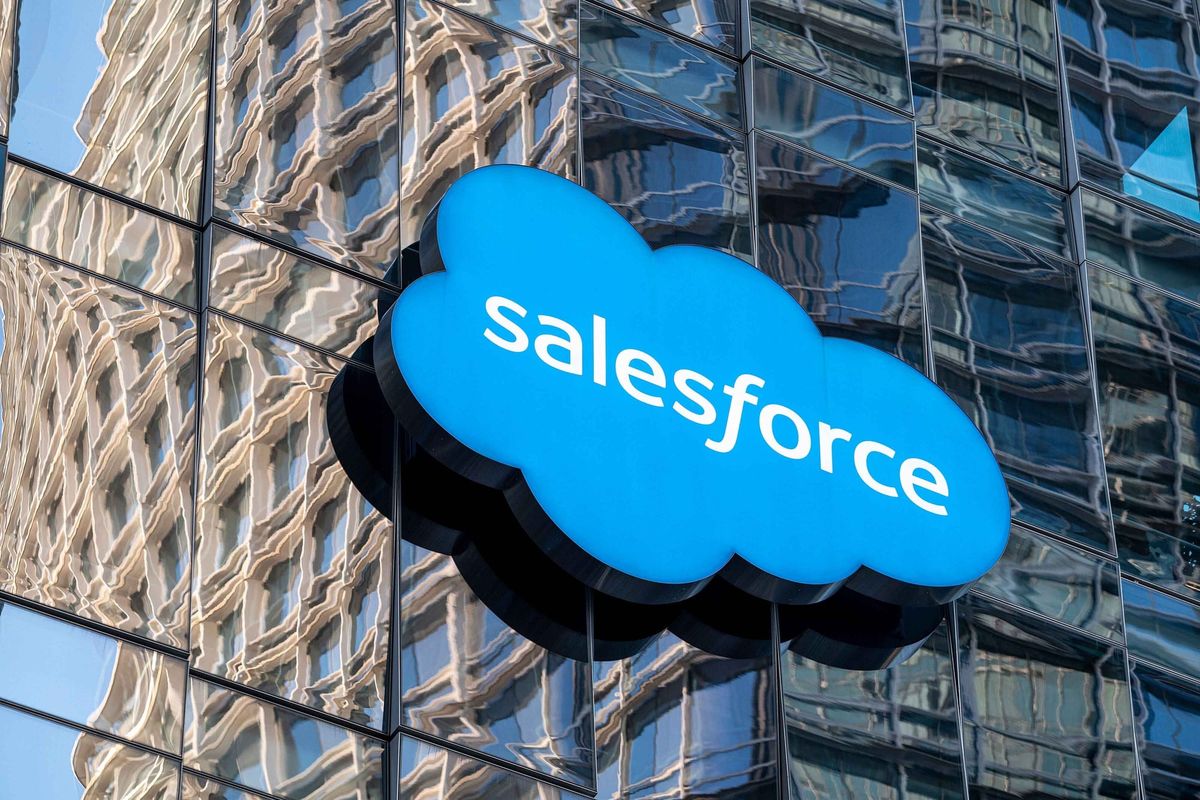
2. Koa: Salesforce builds its own CRM reasoning model
Salesforce also introduced Koa, its first CRM reasoning model, developed with NVIDIA and built on NVIDIA's Nemotron technology.
Koa has been trained using 27 years of Salesforce CRM intelligence and is designed to handle complex, multi-step enterprise tasks across areas such as sales, marketing and customer service.
“NVIDIA Nemotron open models give Salesforce the foundation to turn decades of enterprise expertise into specialized AI with Koa, creating a CRM model that can reason and securely take action,” Jensen Huang, NVIDIA Founder and CEO, said.
Reasoning models are designed to spend more computational effort working through complex problems before producing an answer or taking an action.
For customers, the potential benefit is more capable agents that understands CRM-specific work rather than treating Salesforce as another generic database.
It could also give Salesforce greater control over the intelligence layer powering Agentforce. Instead of relying entirely on external model providers, Salesforce can optimise models for its own enterprise workloads.
However, Koa does not necessarily mean customers will use only Salesforce's model. Salesforce's broader strategy remains model-flexible, with partnerships including Anthropic, NVIDIA, AWS and Google Cloud.
 The Left Shift Bureau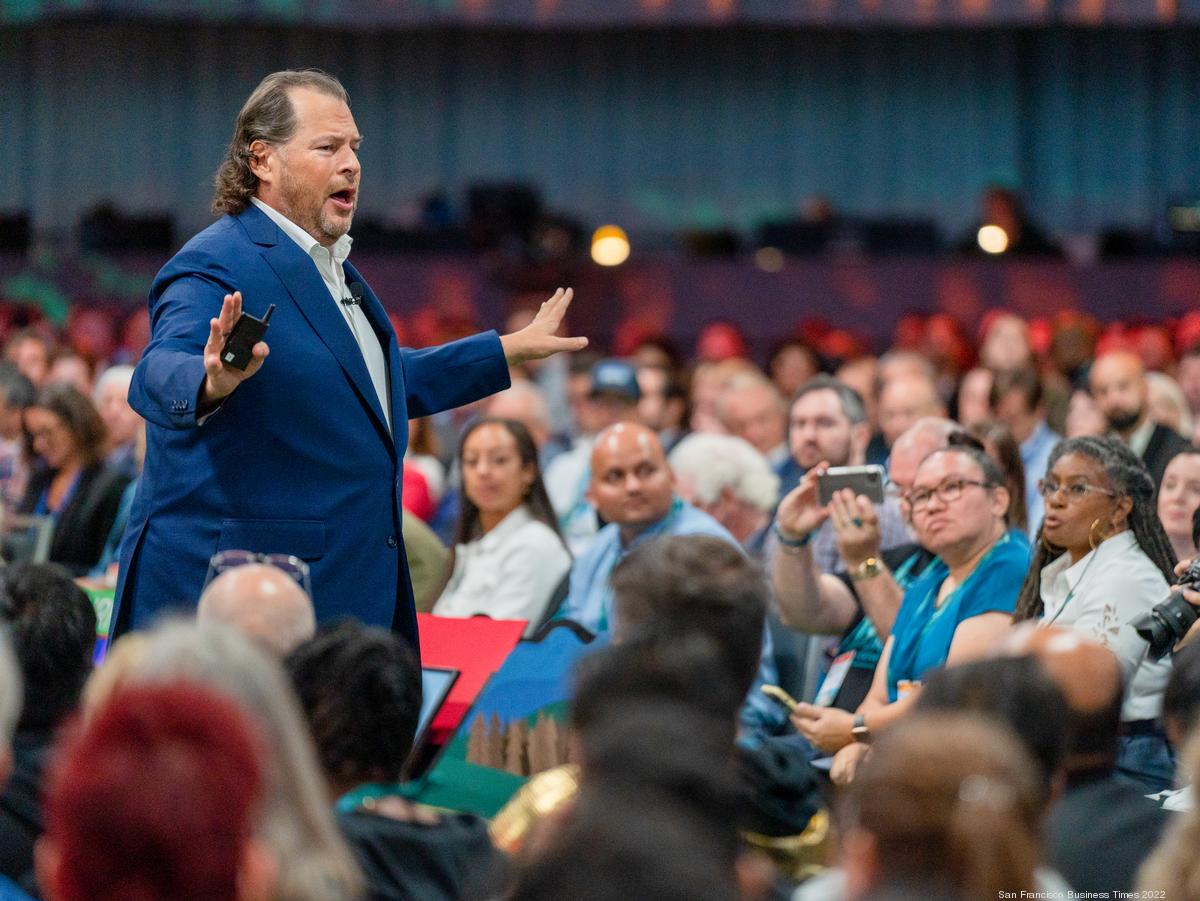
3. Agentforce moves from assistants to longer-running digital workers
Another major development was Salesforce's expansion of Agentforce with what it describes as job-ready AI agents. The new agents are designed to take on more complex work across sales, service, commerce and workforce operations. Salesforce says they can pursue goals over days and weeks, learn new skills, work with other agents and continuously improve.
That represents an important evolution from the first generation of enterprise AI assistants. Traditional copilots largely help employees perform individual tasks, for example summarising an account, drafting an email or answering a question. Agentforce is moving toward systems that can take responsibility for a larger business objective.
For example, an agent could engage an inbound prospect, qualify the lead and hand an appropriate opportunity to a human seller.
4. Slackforce brings Salesforce intelligence into the workplace
Salesforce's push beyond its own interface also extends to Slack through Slackforce. Salesforce wants to turn Slack into an environment where employees and agents can work with enterprise information rather than simply communicate about it.
Salesforce has been expanding Slack's role as an AI workspace, including new agentic and coding capabilities.
 The Left Shift Bureau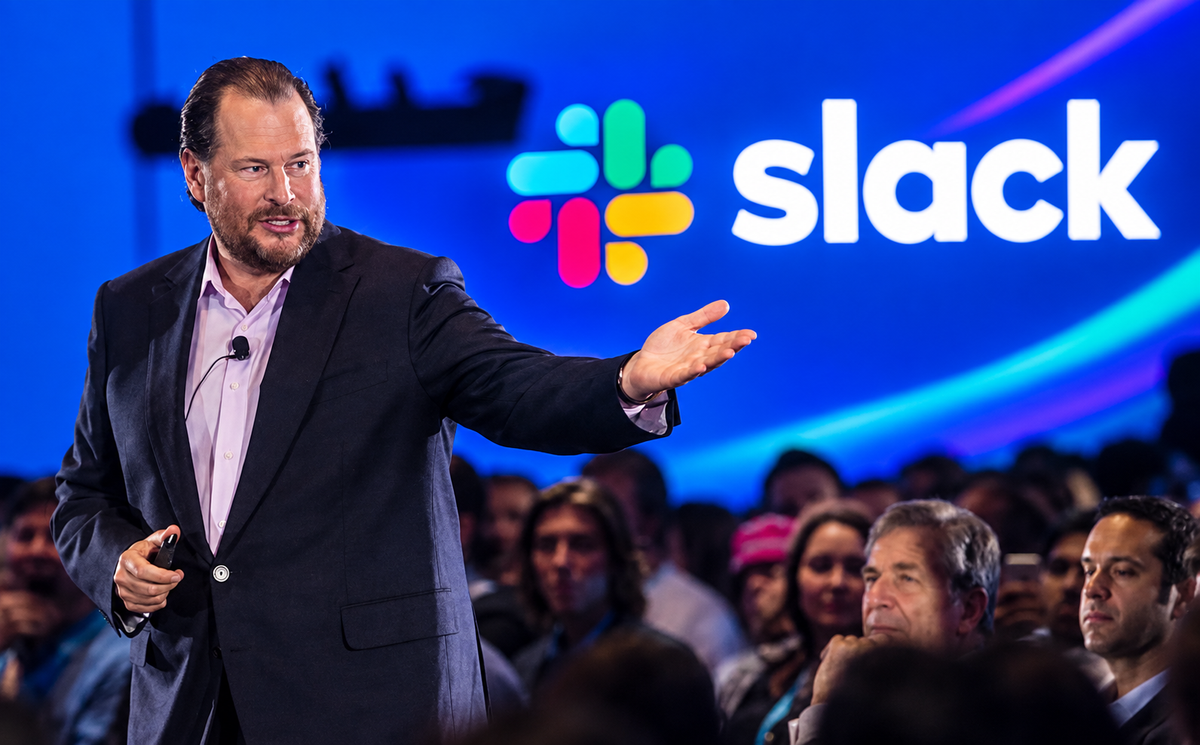
Now, enterprise employees can interact with business data in a place where they already spend considerable time. Imagine a sales team discussing an account in Slack. Instead of opening multiple Salesforce records, an employee could ask an agent for account information, identify an overdue opportunity or trigger an approved workflow directly from the conversation.
The important part is not the chat interface itself. If Slack becomes a front end for Salesforce workflows, employees could move from discussing work to actually completing work without leaving the collaboration environment.
For Salesforce customers, this could make existing investments in CRM data more accessible to employees who do not spend their entire day inside Salesforce.
5. Salesforce deepens its multi-model AI strategy
The fifth major development is Salesforce's expanding network of AI partnerships. The company has already announced Claudeforce, bringing Anthropic's Claude models together with Salesforce's data, workflows, business logic, actions and governance.
At Dreamforce, Salesforce also highlighted expanded relationships with NVIDIA, AWS and Google Cloud. This is strategically important because Salesforce does not have to win the foundation-model race to remain central to enterprise AI.
Instead, it can position itself as the layer connecting different models to enterprise data and business processes. That approach also gives customers greater model choice. Different enterprises may prefer different models because of cost, performance, security, geography or specific workloads.
Dreamforce 2026, therefore, wasn't simply about Salesforce adding AI to CRM. It was about Salesforce trying to make CRM infrastructure itself part of the AI era—with the application becoming less visible while the data, workflows and business logic underneath it become increasingly important.
 The Left Shift Bureau
 The Left Shift Bureau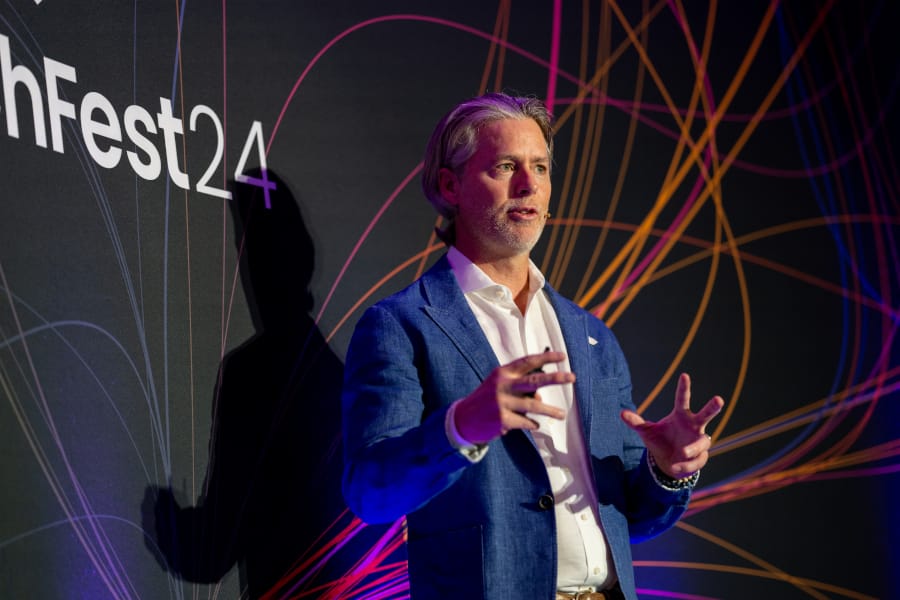
 The Left Shift Bureau