OpenAI Introduces Dots as Always-On AI Agents for Long-Running Work
Unlike conventional ChatGPT conversations, where users typically provide instructions for each task, dots are designed to pursue broader goals over extended periods.

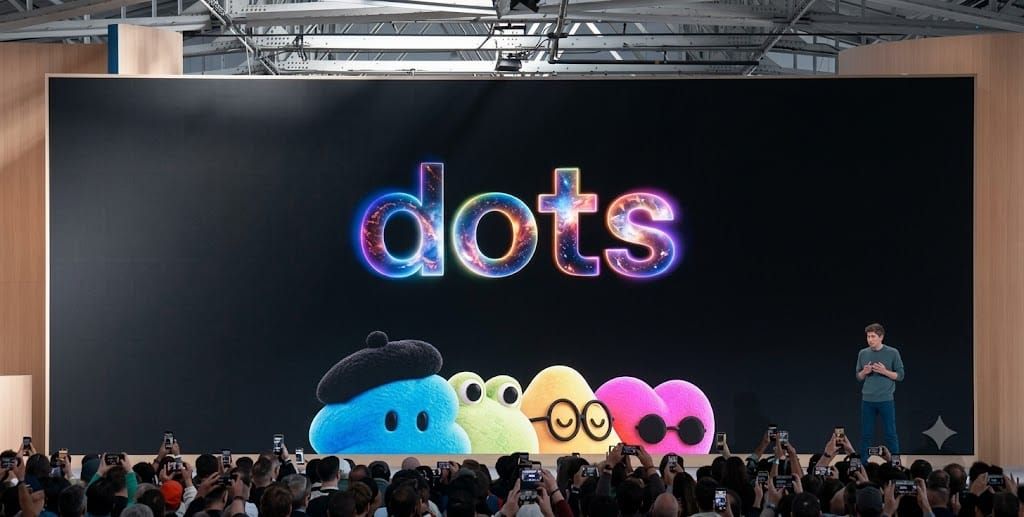
OpenAI has introduced dots, a new class of always-on AI agents designed to take responsibility for ongoing work rather than simply respond to individual prompts.
The company says dots can keep working across complex projects, handle multiple tasks at once, and return to users when they need input or a decision.
Introducing dots, powered by GPT-6 Astra.
— OpenAI (@OpenAI) September 29, 2026
Remarkably capable, always-on agents built to handle everything. pic.twitter.com/inY5BZj3Kz
Unlike conventional ChatGPT conversations, where users typically provide instructions for each task, dots are designed to pursue broader goals over extended periods.
 The Left Shift Bureau
Powered by GPT-6 Astra, each dot operates with its own cloud computer and browser. This allows each dot to interact with connected tools and applications while carrying out assigned work. OpenAI says users can continue adding tasks and ideas without having to manage separate conversations or direct every individual step.
"You can also message your dot in Slack and Teams, with texting coming soon. Start a project in ChatGPT, share context with the working team in Slack, and let your dot follow through. Dots carry context across every channel, so your dot will have the full context wherever you reach it," OpenAI said.
The company is positioning dots around what it describes as proactive and persistent AI assistance. A dot can work on several projects simultaneously and continue making progress after a user has moved on to another task, with the system designed to surface results or ask for input when necessary.
OpenAI has also built safeguards around the agents because of the risks associated with giving AI systems greater autonomy. The company says its monitoring systems can detect safety concerns and pause or stop a dot's work when potentially harmful behaviour is identified.
"We’re starting with focused enterprise pilots. Our engineering teams will work directly with organisations to define each dot’s responsibilities, the tools it can use, and how people review and approve its work. If there’s work you’d like a specialist dot to take on, we’d like to hear from you," OpenAI said.
OpenAI says the first dot is included at no additional cost for eligible Pro and Business Premium users, while Enterprise users can access a beta when their workspace administrator enables it. The company plans to allow users to add more dots and scale their output over time.
OpenAI’s new offering competes with Meta, which launched its Muse personal AI agent earlier this year. Like OpenAI’s agents, Muse operates on a dedicated cloud-based computer, allowing it to perform tasks beyond conventional chatbot interactions.
 The Left Shift Bureau
 The Left Shift Bureau
 The Left Shift Bureau