Marvell to Invest $250 Mn in India, Double Workforce to Boost R&D
As part of the investment, Marvell will inaugurate a new wing at its Bengaluru office and expand operations in Hyderabad.

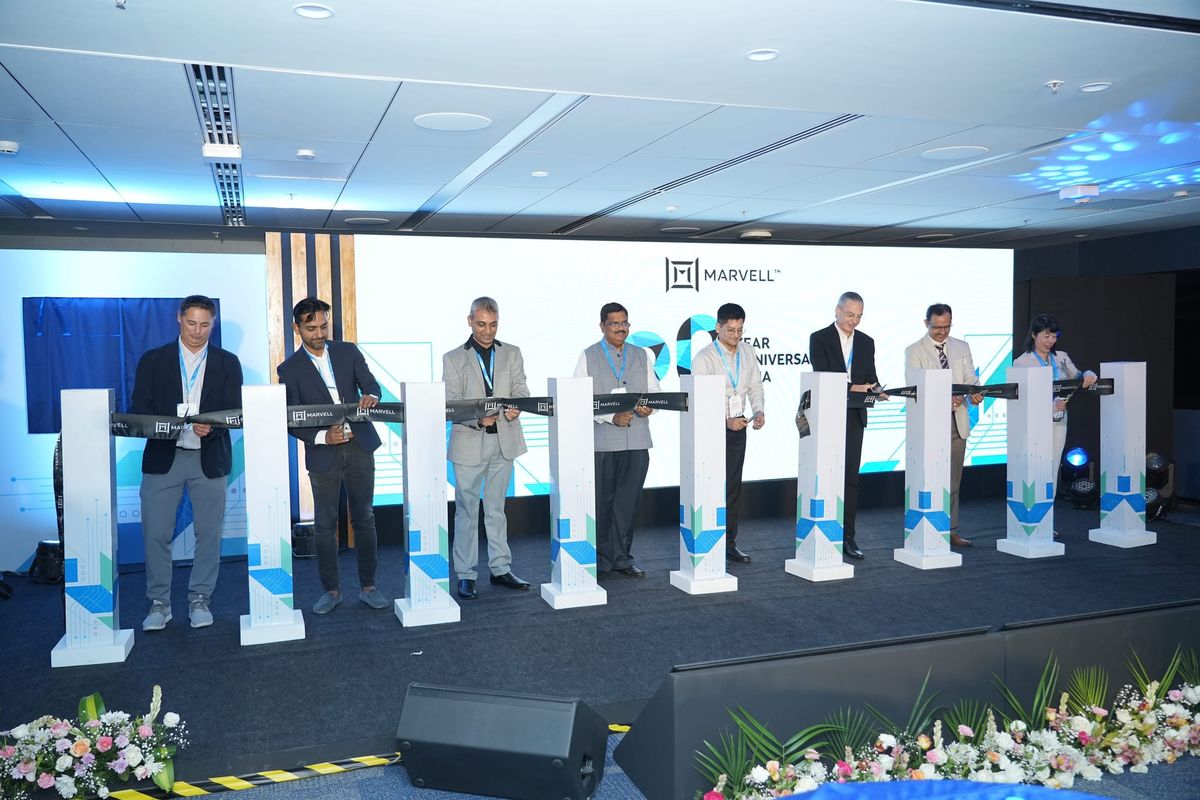
Marvell Technology plans to invest $250 million in India over the next three years to expand its research and development capabilities for AI, cloud, and data infrastructure technologies.
The announcement coincides with the company's 20th anniversary of operations in India, marking two decades of engineering and product development in one of its largest global R&D hubs.
As part of the investment, Marvell will double its workforce over the next three years, inaugurate a new wing at its Bengaluru office, and expand operations in Hyderabad.
The company said the expanded footprint will support the design and development of next-generation semiconductor technologies powering hyperscalers, cloud providers, and AI infrastructure worldwide.
"India has become a strategic hub of engineering excellence for Marvell, playing a critical role in advancing the infrastructure technologies that power the world's leading hyperscalers and cloud providers.
"As we celebrate 20 years in India, we remain committed to expanding R&D investments, strengthening the country's semiconductor ecosystem and developing the next generation of technology talent," said Navin Bishnoi, Marvell VP & India country manager.
Marvell established its India operations in Bengaluru in 2006 and has since grown the country into its second-largest R&D organisation globally. Engineering teams across Bengaluru, Pune, and Hyderabad contribute to the development of advanced semiconductor technologies, including 2nm and beyond process nodes, high-speed analog IP, subsystem design, software and firmware development, and end-to-end silicon engineering.
Beyond expanding its engineering operations, Marvell said it will continue investing in India's semiconductor ecosystem through partnerships with universities, startups, industry bodies, and government organisations.
The collaborations include internships, faculty development programmes, joint research initiatives, curriculum design, and startup mentorship to strengthen the country's semiconductor talent pipeline.