An Indian AI Model That Doesn’t Chat Claims Top Spot on Hugging Face
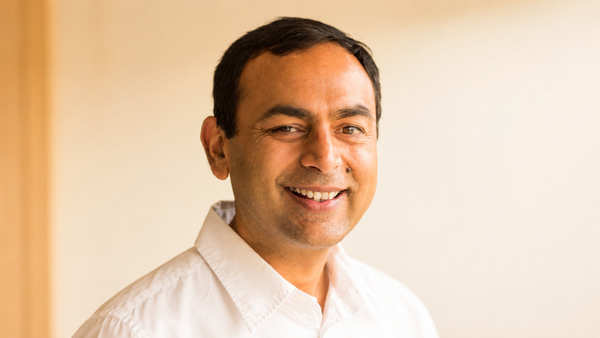
The model, Laya, was developed by Nandhakishor Mukkunnoth, who is based in the Southern part of India and teaches Generative AI through his Instagram account.


An AI model trained by a Kerala-based developer has emerged as the top trending model on Hugging Face, according to CEO Clément Delangue.
“The number one trending model on HF is an open-source multilingual system 1 decision model,” Delangue wrote on X.
The model, Laya, was developed by Nandhakishor Mukkunnoth, who is based in the Southern part of India and teaches Generative AI through his Instagram account. He is also the Chief Executive Officer at ConvAI Innovations.
The first model of Laya was created with a single over night training and fine-tuning. It only took 15 hours from training to push the model on HF, GitHub and creating the blog.
— Nandakishor m (@Nandakishorm1) September 22, 2026
Unlike a conventional generative AI model, Laya does not generate text. It is a non-autoregressive decision model that takes inputs such as text, emails, support tickets or JSON and answers predefined questions with probabilities and confidence scores in a single forward pass.
 Pritam Bordoloi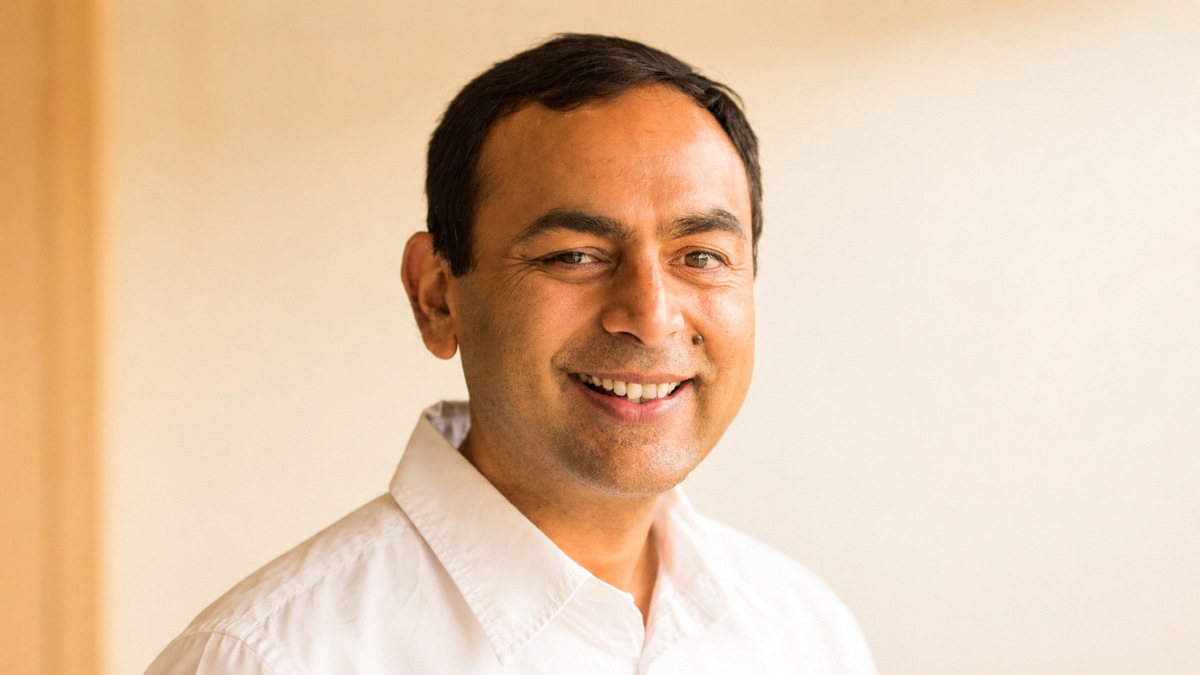
"Just one year back, I was very curious about a question: if we ask a question to an LLM, its self-attention & FFN high-dim projection layers already know the answer in a single pass. Why should we just take that non-text info out from those layers? That's how the journey of Laya began," Mukkunnoth said.
Its multilingual version uses a 322-million-parameter mmBERT-base architecture and supports more than 100 languages, including several Indian languages such as Hindi, Bengali, Tamil, Telugu, Kannada and Malayalam. The model card lists the multilingual version as roughly twice as fast as the English checkpoint.
Laya reports 99.1% accuracy on their intent-and-routing evaluation and 96.7% on moderation and safety tasks, although these are the developers' own benchmark results and should not be treated as independent validation.
The model is released under the Apache 2.0 licence, giving developers access to its weights and code for experimentation and commercial use.
India’s open-source AI ecosystem is expanding beyond foundation models, with developers releasing models for multilingual AI, reasoning and specialised enterprise tasks. Examples include Sarvam AI’s Sarvam-30B and 105B.
 The Left Shift Bureau
 The Left Shift Bureau
 The Left Shift Bureau