The U.S. Just Let AI Fly a Combat-Ready F-16—and It Worked
The flight was conducted under the Viper Experimentation and Next-generation Operations Model (VENOM) programme, a joint initiative between the Defense Advanced Research Projects Agency (DARPA) and the U.S. Air Force.

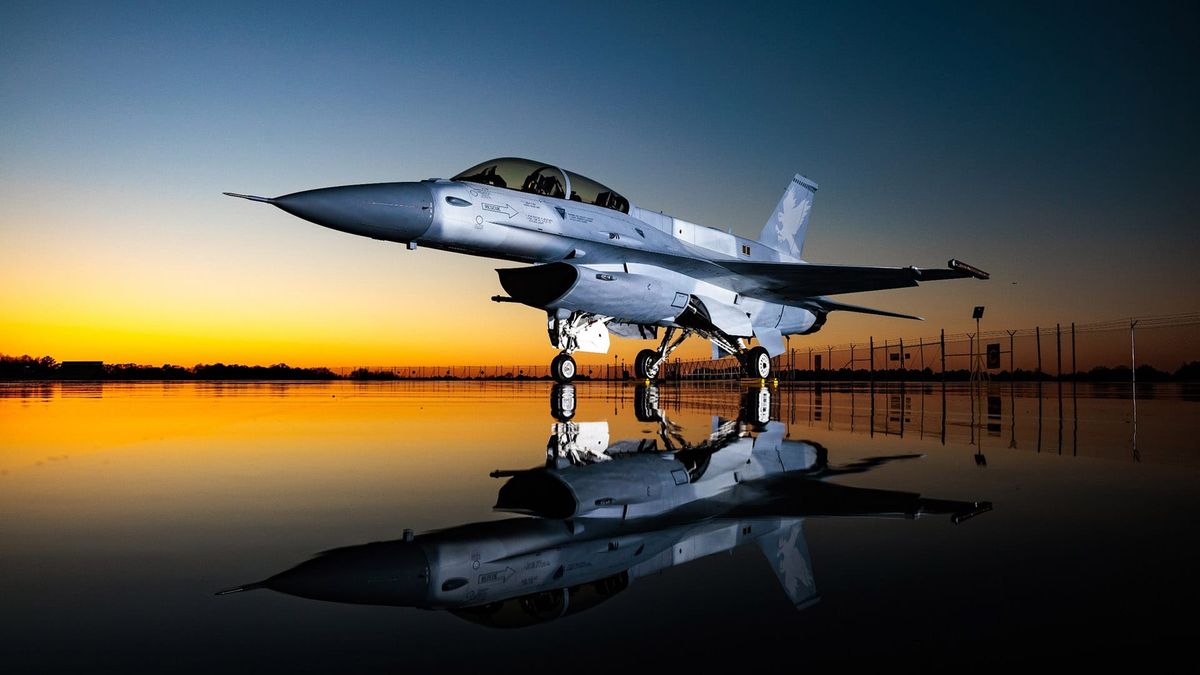
A modified U.S. Air Force F-16 has flown under the control of an AI agent for the first time, marking a major milestone in the Pentagon's push toward autonomous combat aviation.
The flight was conducted under the Viper Experimentation and Next-generation Operations Model (VENOM) programme, a joint initiative between the Defense Advanced Research Projects Agency (DARPA) and the U.S. Air Force.
Unlike previous AI flight tests involving experimental aircraft, this demonstration used a standard operational F-16, proving that existing fighter jets can be retrofitted to test advanced AI systems.
The autonomous flight took place at Eglin Air Force Base in Florida. DARPA said the achievement builds on earlier Air Combat Evolution (ACE) trials with the X-62A VISTA aircraft but represents a more practical leap toward integrating AI into frontline military platforms.
“These groundbreaking flight tests of VENOM-modified F-16s advance the infrastructure needed to develop trusted, autonomous air combat capabilities,” said Brig. Gen. James “Fangs” Valpiani, Ph.D., DARPA program manager.
At the heart of the programme is the VENOM Autonomy Kit, which connects to the fighter's flight controls and mission systems without modifying the aircraft's core software. Pilots can instantly switch between human and AI control using a cockpit switch, ensuring a human remains in command throughout testing.
The VENOM aircraft will now support DARPA's Artificial Intelligence Reinforcements (AIR) programme, where multiple AI agents will be tested in live-flight scenarios.