Sarvam Partners with HP to Bring Multilingual Voice AI to PCs Across India
Kivi supports more than 22 Indian languages and allows users to switch between languages while speaking.

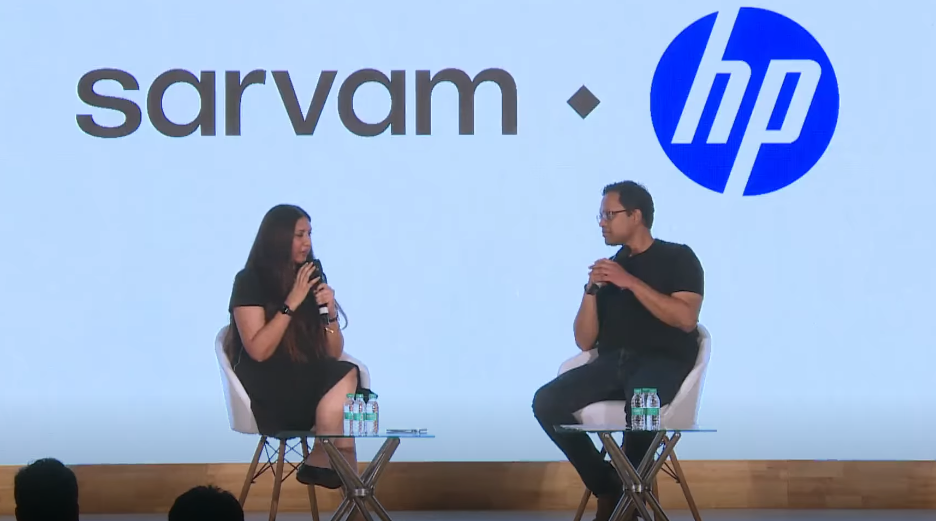
HP and Indian AI startup Sarvam are partnering to bring voice AI models to HP devices in India. Under the partnership, Sarvam’s voice AI capabilities will be integrated into HP’s computing ecosystem, with voice emerging as the first area of collaboration.
At the centre of the initial collaboration is Kivi, a voice application powered by Sarvam. The application allows users to interact with their computers through speech and perform tasks across applications they already use. Users can dictate text, draft and rewrite content, search for information and seek assistance with tasks using voice commands.
Kivi supports more than 22 Indian languages and allows users to switch between languages while speaking. This code-switching capability is particularly relevant in India, where people frequently move between English and regional languages during everyday conversations.
The partnership is intended to address one of the challenges of making AI useful across India, which is to enable people to interact with technology in the same way they communicate in everyday life.
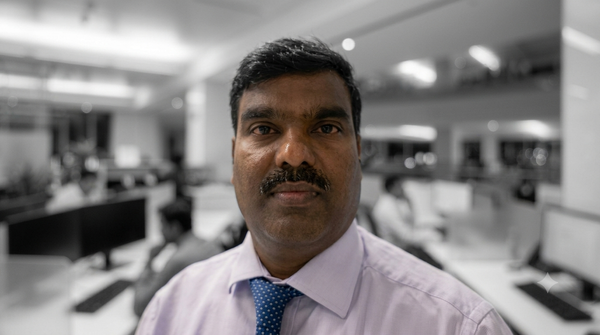
“AI adoption will depend on how naturally the technology fits into the way people already work and learn. By bringing Sarvam's AI capabilities to HP devices, we can make these experiences more accessible across languages and everyday computing tasks,” Ipsita Dasgupta, HP India, Bangladesh, & Sri Lanka Sr. VP & Managing Director, said in a statement.
The companies said voice is only the starting point for a broader collaboration. The memorandum of understanding envisages developing additional AI experiences for HP devices and workflows as expectations around AI-powered PCs evolve.
“The PC remains the primary interface through which much of the world gets work done. Voice offers a more natural way to interact with it. By bringing Sarvam's voice and language capabilities to HP devices, we can make that interaction available across the applications people already use every day.” Pratyush Kumar, Co-Founder, Sarvam, added.
The move also reflects the growing importance of local-language AI in India. According to the Internet and Mobile Association of India (IAMAI) and Kantar, India had 886 million active internet users in 2024, with 98% accessing content in Indic languages. Rural users accounted for 55% of the internet population.
Why voice AI matters in India
Voice is becoming an increasingly important interface for AI in India because it reduces the dependence on typing, English-language proficiency and traditional graphical interfaces.
IAMAI-Kantar data further shows that one in five Indian internet users use voice-based commands to access the internet. Google, too, described India as its largest user base globally for both voice and visual search.
The opportunity is particularly significant given India’s linguistic diversity. A 2026 consumer study by Northstar Digital found that 60% of current Indian AI users already interact with AI through voice at least sometimes, while 59% have tried AI interactions in Hindi or a regional language.
What the HP-Sarvam deal means for users
For HP users, the partnership could make the PC less dependent on traditional keyboard-and-mouse interaction. Instead of typing a long prompt, searching through menus or switching between applications, users will be able to use spoken instructions for tasks such as drafting documents, rewriting text, finding information or getting assistance while working.
The biggest potential benefit is multilingual access. Kivi’s support for more than 22 Indian languages and code-switching means users can communicate in languages they are comfortable with rather than adapting their speech to the limitations of a computer interface.
That could be particularly useful for students, professionals and first-time or less confident computer users, as well as people who find typing difficult. It also gives HP a way to differentiate its AI-enabled PCs through locally developed AI rather than relying solely on global AI assistants.
For Sarvam, the partnership provides a path to put Indian-language AI directly onto consumer computing devices at scale. For HP, it could help make AI PCs more relevant to India’s multilingual user base.
The longer-term significance, however, could extend beyond voice. If the partnership evolves as planned, Sarvam’s language and AI capabilities could become part of a broader layer of locally relevant AI experiences across HP devices, potentially changing how Indian users work, learn and create on PCs.