The Most Important Google Employee You've Never Heard Of Is Leaving After 27 Years
In 2011, Dean co-founded Google Brain alongside Andrew Ng and Greg Corrado.

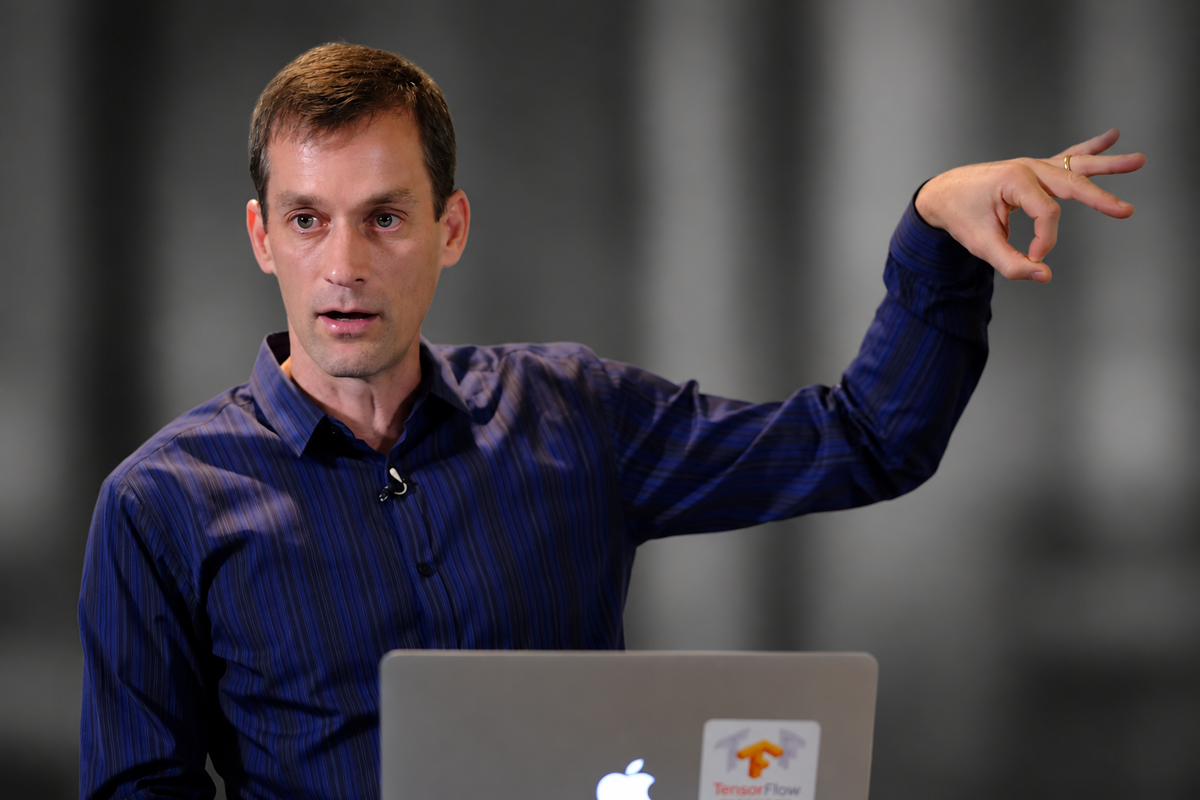
When Jeff Dean announced that he was leaving Google after 27 years to co-found AI startup Discovery Loop, the news marked more than the departure of another senior executive. It closed one of the most influential engineering chapters in Silicon Valley history.
Dean, along with fellow Google AI veterans Sanjay Ghemawat, Oriol Vinyals and Quoc Le, is leaving as part of a broader leadership reshuffle that has seen Google DeepMind CEO Demis Hassabis take on an expanded role as Alphabet's Chief Scientist.
"Tomorrow will be my last day at Google after 27 years, and watching it grow from 25 people to 190,000+ has been an amazing journey," Dean said.
While Discovery Loop will focus on advancing frontier AI research with backing from Google Cloud, Dean's departure is significant for a different reason: few individuals have shaped Google's technology—and by extension, the modern internet—as profoundly as he has.
Announcing Discovery Loop!
— Jeff Dean (@JeffDean) August 5, 2026
I am very excited to announce that, along with my longtime friends and collaborators @Sanjay_Ghemawat, @OriolVinyalsML and @quocleix, we are founding Discovery Loop (@DiscoLoopAI), a Public Benefit Corporation whose mission is to automate machine… pic.twitter.com/ancoplyNvN
Over the years, Dean quietly built the technical foundations that powered Google Search, YouTube, Gmail, Maps, Cloud and, eventually, the company's artificial intelligence ambitions. Much of today's cloud computing and AI ecosystem can trace its origins to systems he helped design.
The engineer who grew up with Google
Jeff Dean joined Google in 1999 when the company had fewer than 100 employees. Search was still a niche product competing with Yahoo and AltaVista, and Google had yet to become the technology giant it is today.
Over nearly three decades, Dean became Google's engineering north star. While CEOs, product leaders and business priorities evolved, he remained one of the company's most respected technical minds, eventually becoming Senior Fellow and Chief Scientist.
Within Google's engineering circles, Dean earned an almost mythical reputation. The famous "Jeff Dean Facts", an internal collection of tongue-in-cheek jokes that painted him as a superhuman programmer capable of solving impossible computing problems. One quip joked that "Jeff Dean's keyboard has two keys: 0 and 1." Another claimed he could solve NP-complete problems in polynomial time.
Behind the humor was genuine admiration. Few engineers influenced as many foundational technologies.
I also want to give a huge thanks to the incomparable @JeffDean after an incredible 27-year run at Google. He’s off to start his own public benefit corporation with @Sanjay_Ghemawat focused on accelerating discoveries across ML, science, & engineering. @Google will support as a…
— Sundar Pichai (@sundarpichai) August 5, 2026
Building the infrastructure that powers modern computing
Long before artificial intelligence became Google's defining business, Dean helped solve one of computing's biggest challenges: how to process unimaginably large amounts of data across thousands of machines.
One of his most influential contributions was MapReduce, introduced in 2004. Co-authored with Sanjay Ghemawat, the programming model made it dramatically easier to process petabytes of information across distributed computer clusters. It transformed Google's internal operations and inspired the open-source Hadoop ecosystem, laying the groundwork for today's big data industry.
The impact of MapReduce extended far beyond Google. Amazon, Microsoft, Meta and virtually every modern cloud platform adopted similar distributed computing principles.
Dean followed that breakthrough with another landmark project: Bigtable. Published in 2006, Bigtable introduced a scalable distributed database capable of storing massive datasets while maintaining high performance. The system became the backbone for products including Search, Gmail, Maps and Google Earth. It also inspired widely adopted NoSQL databases such as Apache HBase and influenced Apache Cassandra.
Another milestone was Spanner, Google's globally distributed database capable of maintaining strong consistency across data centers around the world. For decades, database researchers viewed consistency and global scale as competing priorities. Spanner demonstrated that both could coexist, fundamentally changing how cloud databases were designed.
These projects rarely attracted mainstream attention, but they became the invisible infrastructure powering billions of internet users every day.
From cloud pioneer to AI architect
If Dean's first decade at Google helped define cloud computing, his second reshaped artificial intelligence.
In 2011, Dean co-founded Google Brain alongside Andrew Ng and Greg Corrado. At a time when deep learning remained largely confined to academic research, Google Brain sought to apply neural networks to products used by billions of people.
The project soon became Google's AI research powerhouse, driving advances in speech recognition, computer vision, language understanding and recommendation systems.
Dean also championed the development of TensorFlow, released as open-source in 2015. The machine learning framework quickly became one of the world's most widely used AI development platforms, allowing researchers, startups and enterprises to build deep learning models without creating infrastructure from scratch.
For years, TensorFlow served as the default framework for AI education and enterprise deployment, helping democratize machine learning long before generative AI entered the mainstream.
Dean also played a critical leadership role in Google's investment in custom AI hardware. Recognising early that general-purpose processors would struggle to meet AI's computational demands, Google developed Tensor Processing Units (TPUs)—specialised chips designed to accelerate machine learning workloads.
The decision gave Google a significant advantage in deploying AI at scale and foreshadowed today's industry-wide race to develop custom AI accelerators as companies seek alternatives to NVIDIA GPUs.
Helping build the age of generative AI
Dean's influence became even more significant as Google entered the generative AI era. Although he was not one of the authors of the landmark 2017 research paper Attention Is All You Need, he oversaw one of the world's most influential AI research organisations during the period that produced it.
The Transformer architecture introduced in that paper became the foundation for nearly every modern large language model, including ChatGPT, Gemini, Claude and Llama.
As Google's Chief Scientist, Dean also helped shape the company's long-term AI strategy, overseeing research spanning multimodal models, large-scale training infrastructure, efficient AI systems and advanced reasoning models that eventually contributed to the Gemini family. He was among Time's 2025 most influential people in AI.
A legacy larger than Google
Beyond his engineering achievements, Dean's academic impact is equally remarkable. He has co-authored more than 200 research papers, holds hundreds of patents, received the ACM Prize in Computing, and was elected to the National Academy of Engineering.
Unlike many Silicon Valley icons, however, Dean rarely sought public attention. His influence came through code, research papers and mentoring generations of Google's engineers.
For nearly three decades, Jeff Dean didn't simply help build Google. He helped build the computing foundations on which much of the modern internet and now the AI era stands.