NVIDIA Unveils AI Model to Help Robotaxis Handle Complex Real-World Driving Scenarios
Alpamayo 2 Super is designed to go beyond object detection and motion prediction by enabling vehicles to understand context, reason through cause and effect.

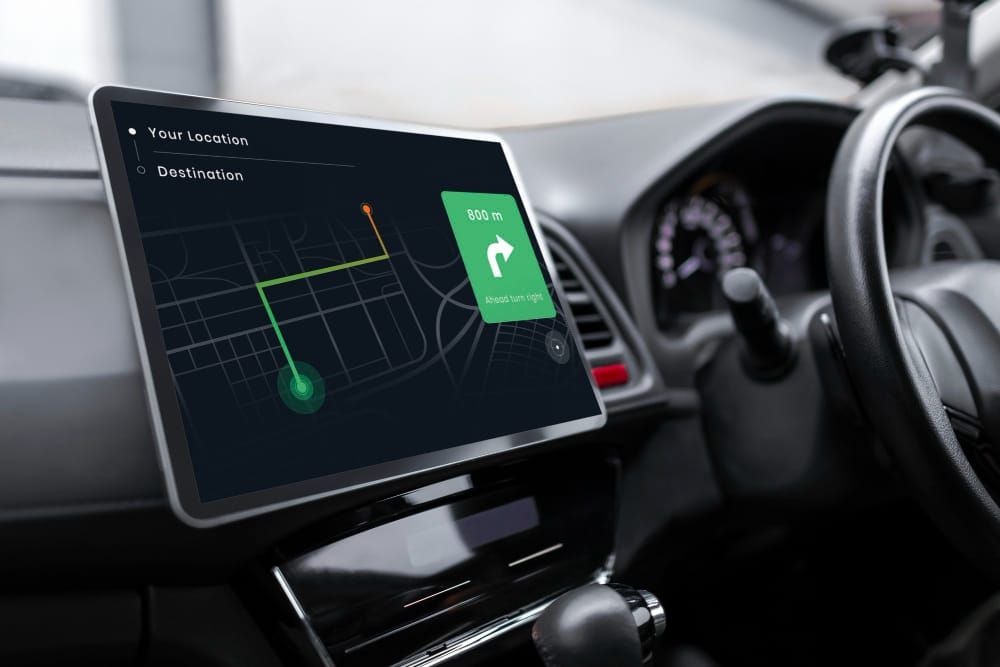
NVIDIA has launched Alpamayo 2 Super, an open AI reasoning model designed to help autonomous vehicles (AVs) better navigate rare and unpredictable driving scenarios.
The model, now available for commercial use, is part of NVIDIA's Alpamayo family of open reasoning models and is built on NVIDIA Cosmos 3 Super Reasoner. It has been post-trained using reinforcement learning and is released under the Linux Foundation's OpenMDW-1.1 license, allowing automakers, suppliers and autonomous driving developers to fine-tune, modify and commercially deploy the model.
According to NVIDIA, Alpamayo 2 Super is designed to go beyond object detection and motion prediction by enabling vehicles to understand context, reason through cause and effect, select the safest driving action and generate explainable decisions in real time.
"Beyond seeing, Alpamayo understands and reasons through the complex world - thinks before it acts. It’s a powerful backbone for robotaxis, trucks, shuttles, delivery vans, tractors and the long tail of mobile robots—billions of autonomous machines someday," Jensen Huang, NVIDIA CEO, said.
The company said the model is designed to solve "long-tail" driving events—rare but safety-critical situations that conventional autonomous driving systems often struggle to handle.
The open licensing model also gives developers greater control over proprietary fleet data and AI infrastructure while reducing the cost of building production-ready autonomous driving models.
NVIDIA said Alpamayo 2 Super achieved the highest score on LingoQA, an autonomous driving reasoning benchmark, outperforming Qwen2.5-VL 72B, Gemini 2.5 Pro and GPT-4o in its internal evaluations.
The model is three times larger than the earlier Alpamayo 1 and 1.5 models, enabling it to better generalise from limited training examples and reason across complex multi-agent driving scenarios.
The AI model processes 360-degree camera inputs and generates multiple outputs simultaneously, including a planned driving trajectory, a chain-of-causation explaining its decisions, driving intent such as lane changes or yielding, reasoning labels for training datasets and grounded visual question-answering responses. NVIDIA said these capabilities make AI decisions easier to inspect, validate and integrate into safety workflows aligned with ISO/PAS 8800 requirements.
Alpamayo 2 Super is also part of NVIDIA's broader open autonomous driving ecosystem, which includes AlpaSim for simulation, AlpaGym for reinforcement learning, Physical AI Open Datasets and open training recipes.
The Alpamayo model family has surpassed 500,000 downloads on Hugging Face, making it the platform's most-adopted open reasoning model family for autonomous driving.
NVIDIA has unveiled Cosmos 3 Edge, a new open-source world model designed to help robots and vision AI systems better understand, predict, and interact with the physical world in real time.