Digital Advocacy Groups Call Indian Government's BitChat Ban Unconstitutional
BitChat is an open-source, decentralised messaging application that enables users to communicate without relying on mobile data, Wi-Fi, cellular networks, or even phone numbers.

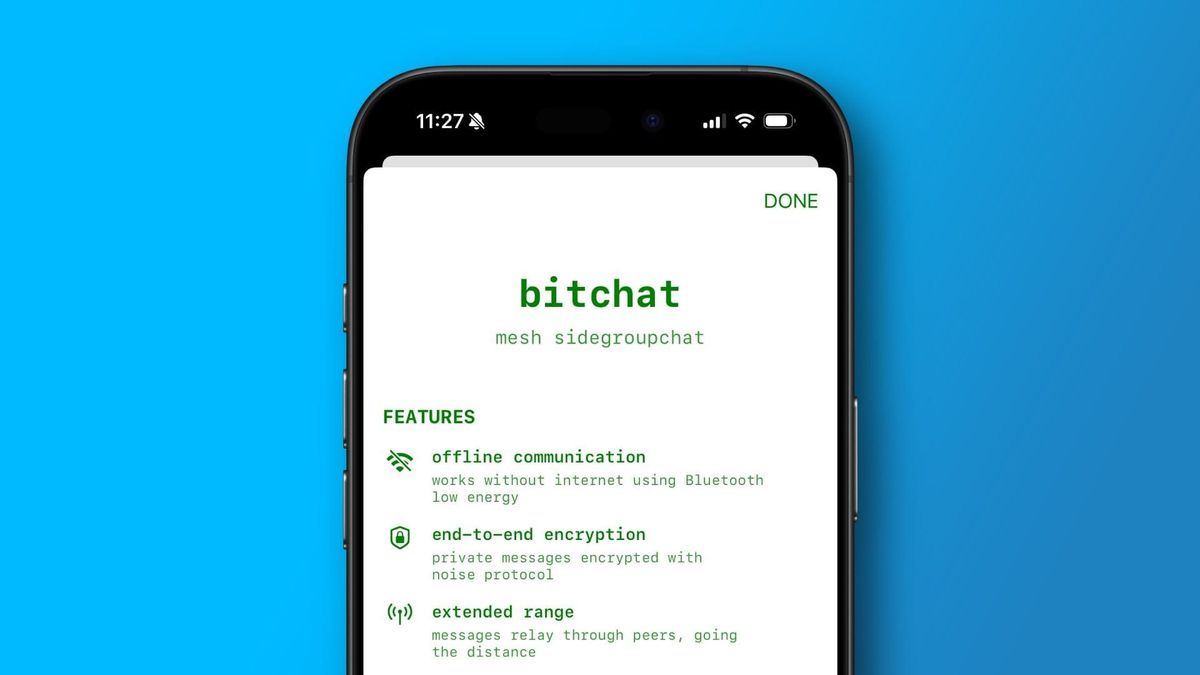
Jack Dorsey's decentralised messaging app BitChat has landed at the centre of a fresh controversy after India's Cyber Crime Coordination Centre (I4C) under the Ministry of Home Affairs (MHA) sought the removal of repositories hosting the app's source code on GitHub.
The takedown request came a day after allegations that authorities attempted to restrict mobile internet services during the ongoing student-led protests in New Delhi, raising concerns among digital rights advocates about access to censorship-resistant communication tools.
the government of india does not like technologies like bitchat and wants it taken down pic.twitter.com/gjzMg1NGCi
— jack (@jack) July 24, 2026
The Internet Freedom Foundation (IFF), a leading digital advocacy group from India, called the government's decision to ban BitChat unconstitutional. It called the takedown order illegal, arguing that it bypasses the legal process under Section 69A of the IT Act, provides vague and circular reasoning, wrongly cites unrelated legal provisions, and imposes an unreasonable three-hour compliance deadline that undermines due process and proportionality.
"The order also fails on its own terms as deleting a repository does not delete the application from any phone that carries it, and the mesh keeps functioning without servers. What the takedown actually prevents is scrutiny of the underlying code," it said in a statement.
Similarly, Software Freedom Law Centre India (SFLC) said the order fails to satisfy the tests of legality, necessity, and proportionality and constitutes as an abject misuse of Section 79(3)(b) of the IT Act, read with Rule 3(1)(d) of the IT Rules 2021.
"The opacity surrounding these removals goes against the strict requirements of accountability and record-keeping embedded in the Information Technology (Procedure and Safeguards for Blocking for Access of Information by Public) Rules, 2009," it said in a statement.
They have urged the Indian government to withdraw the GitHub takedown notice, publish all content removal orders and their legal justifications, restore internet connectivity around Jantar Mantar, disclose any suspension orders, and reveal the legal basis for deploying signal jammers.
What is BitChat?
BitChat is an open-source, decentralised messaging application that enables users to communicate without relying on mobile data, Wi-Fi, cellular networks, or even phone numbers. Instead, it uses Bluetooth Low Energy (BLE) to create a mesh network, allowing nearby devices to relay messages from one user to another.
Dorsey first introduced BitChat in July 2025 as an experimental weekend project. He said the idea was to explore low-level networking technologies, including Bluetooth mesh, store-and-forward networking, and encryption.
"The initial intention was super simple. The ability for you to exchange text messages with someone in your vicinity that you've never met before. That way you don't need any identifying information about them — no phone number or email, etc. Kind of like FireChat," Dorsey said back then.
The project quickly evolved from a prototype capable of transmitting small packets of data across Bluetooth mesh networks into a fully functional messaging platform. Community contributors later added support for private messaging and channels before the app expanded to iOS and launched on Apple's App Store.
How BitChat Works
Unlike conventional messaging platforms such as WhatsApp or Telegram, BitChat does not depend on centralised servers or internet connectivity.
Every device running the app functions as both a sender and a relay node. If the intended recipient is outside direct Bluetooth range, messages can travel across multiple nearby devices until they reach their destination. This "multi-hop" mesh architecture significantly extends Bluetooth's effective communication range, although its performance depends on the number of active users nearby.
BitChat also does not require users to register with a phone number or other personal identifiers, offering a greater degree of anonymity than traditional messaging platforms.
The platform combines Bluetooth mesh networking with the Nostr protocol, enabling internet-based messaging when connectivity is available while seamlessly switching to offline communication during outages.
BitChat's offline, decentralised design has raised concerns among law enforcement, which fears it could hinder lawful surveillance and criminal investigations.
Supporters argue the technology enables resilient communication during disasters and internet shutdowns.