AI Agents Are Emerging as a New Fraud Attack Surface, Bureau Report Finds
Bureau said generative AI, document synthesis, deepfakes and voice cloning have lowered the technical barriers to fraud.

As autonomous AI agents begin browsing, authenticating and making payments on behalf of consumers, financial institutions will face a new cybersecurity challenge– distinguishing legitimate machine-driven activity from malicious automation.
“Every institution is looking at a fraction of the same attack. An identity that gets declined at one bank is approved at the next within the hour, and neither ever finds out. That is not a technology gap, it is a visibility gap,” said Ranjan R. Reddy, Bureau Founder and CEO.
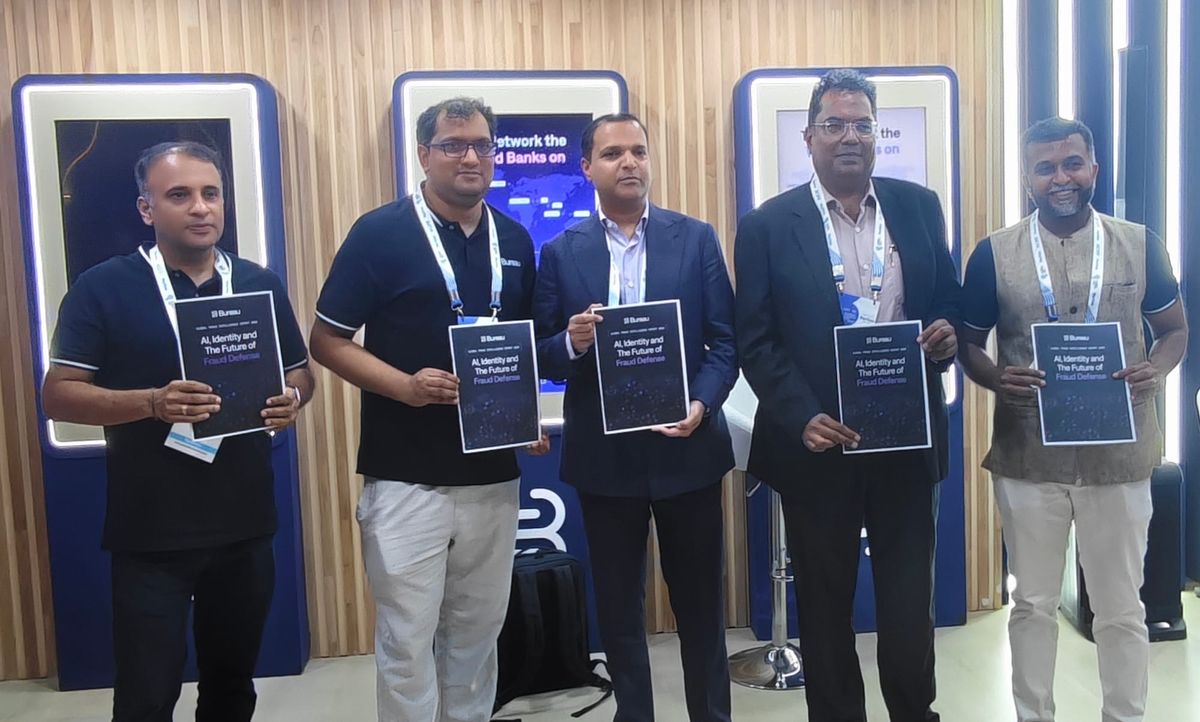
The report titled Global Fraud Intelligence Report 2026, launched at Global Fintech Fest 2026, examines fraud dynamics across North America, Europe, the UK, Southeast Asia, APAC and MENA, combining primary data from INTERPOL, FATF, Europol and the FBI with signals observed across Bureau’s global network. According to INTERPOL, global fraud losses reached $442 billion in 2025.
 The Left Shift Bureau
The report also argues that the shift to agentic AI could fundamentally change how digital identity and fraud prevention work, as institutions increasingly interact with software agents rather than directly with human users.
The concern comes as AI is already lowering the cost of fraud. Bureau’s network identified nearly 14,000 organised fraud rings in the first half of 2026, with one in three involving identities that resurfaced in subsequent attacks. The largest network linked more than 45,000 identities.
Generative AI, deepfakes, voice cloning and synthetic document generation have made sophisticated fraud techniques easier to replicate. Synthetic-linked account takeover events tripled in a single quarter, according to the report.
Agentic AI could take this further by allowing fraud operations to automate multiple stages of an attack. Instead of simply generating a fake identity or phishing message, autonomous systems could potentially research targets, interact with platforms, attempt authentication and execute transactions at machine speed.
The cybersecurity challenge is particularly significant because an authorised AI agent may legitimately possess access to accounts, payment systems and sensitive information.
Security systems will therefore need to establish not only whether an identity is legitimate, but whether an agent is authorised to act, what it is permitted to do and whether its behaviour matches that authorisation.
 The Left Shift Bureau
 Pritam Bordoloi