NVIDIA Unveils Space Computing Module to Power Satellites and Orbital Data Centres
The module is built on NVIDIA’s Vera Rubin architecture, combining a Vera central processing unit with Rubin graphics processing units

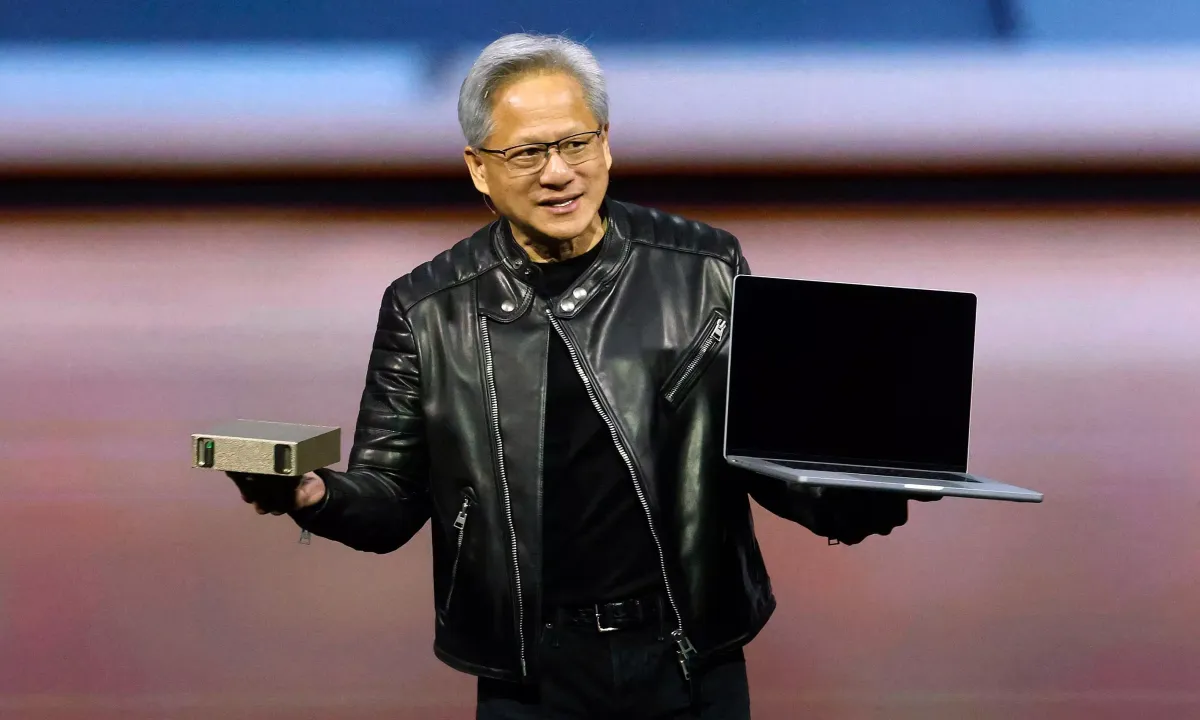
NVIDIA has previewed a new space-focused computing device, the Vera Rubin Space-1 Module, designed to power next-generation satellites and orbital data centres.
CEO Jensen Huang announced the product during his keynote at the NVIDIA GTC conference, positioning it as part of the company’s broader push into space-based AI infrastructure.
The module is built on NVIDIA’s Vera Rubin architecture, combining a Vera central processing unit with Rubin graphics processing units. The Vera CPU features 88 cores equipped with neural branch prediction technology, which allows certain computations to be processed in advance, improving speed and efficiency.
The Rubin GPU, manufactured using a 3-nanometre process, delivers up to 50 petaflops of performance—significantly higher than its predecessor. While NVIDIA has not disclosed full specifications of the Space-1 Module, it is expected to include multiple Vera Rubin chips.
One key challenge for space computing is radiation, which can cause errors in processors and memory. To address this, the system may support lockstep processing, where calculations are performed simultaneously across two chips and compared to detect and correct errors. NVIDIA also uses Error Correction Code (ECC) technology to improve memory reliability.
Cooling remains another major hurdle. “In space there’s no conduction, there’s no convection,” Huang said. “There’s just radiation. And so we have to figure out how to cool these systems out in space. We’ve got lots of great engineers working on it.”
NVIDIA said the module could support both satellites and emerging orbital data centres, a growing area of interest for companies like Sophia Space, Aetherflux and Planet Labs, which are exploring space-based AI infrastructure.
However, not everyone is convinced by the idea of data centres in space. Amazon Web Services (AWS) CEO Matt Garman has cast doubt on the near-term feasibility of space-based data centres, saying the concept remains “pretty far” from becoming a reality despite growing interest from startups and major technology figures.