Google Launches Gemma 4 to Power Next-Generation AI Agents
A key focus of Gemma 4 is improving how AI agents handle real-world tasks.

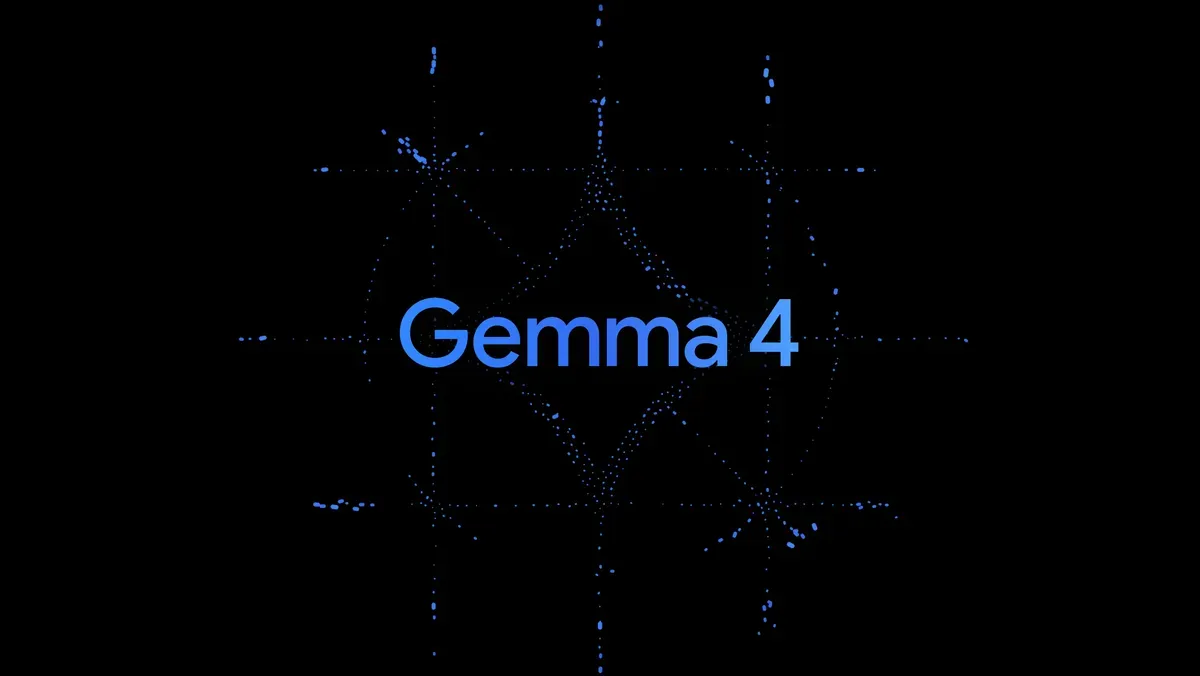
Google has announced the launch of Gemma 4, the latest iteration of its lightweight open model family, with a strong emphasis on enabling more capable and efficient artificial intelligence agents for developers and enterprises. It is releasing Gemma 4 is four sizes- Gemma 4 in four versatile sizes: Effective 2B (E2B), Effective 4B (E4B), 26B Mixture of Experts (MoE) and 31B Dense.
The new release builds on the growing demand for smaller, high-performance models that can run efficiently across devices while still supporting complex, multi-step workflows.
"Our larger models deliver state-of-the-art performance for their sizes, with the 31B model currently ranking as the #3 open model in the world on the industry-standard Arena AI text leaderboard, and the 26B model securing the #6 spot. There, Gemma 4 outcompetes models 20x its size," Clement Farabet, Google DeepMind VP, Research, and Olivier Lacombe, Google DeepMind Group Product Manager, wrote in a blog post.
A key focus of Gemma 4 is improving how AI agents handle real-world tasks. The models are optimised for better reasoning, instruction-following, and tool use, allowing developers to build agents that can interact with APIs, process structured data, and automate workflows more reliably. This aligns with a broader industry shift toward AI systems that go beyond chat interfaces to actively perform tasks.
Google said the models are designed to be flexible and deployable across environments, from cloud infrastructure to local devices. This enables developers to build AI agents that operate in latency-sensitive or privacy-focused use cases without relying entirely on centralised systems.
Gemma 4 also introduces enhancements in multimodal capabilities, allowing agents to process and respond to different types of inputs, including text and images. These improvements are expected to support use cases such as intelligent assistants, automated research tools, and workflow automation systems.
Another major emphasis is accessibility. By keeping the models lightweight and open, Google aims to lower the barrier for developers building agent-based applications, particularly startups and independent developers experimenting with new AI-driven products.
The models are being made available under a commercially permissive Apache 2.0 license. So far, since the launch of its first-generation models, developers have downloaded Gemma more than 400 million times, creating a “Gemmaverse” of over 100,000 variants.
"This open-source license provides a foundation for complete developer flexibility and digital sovereignty; granting you complete control over your data, infrastructure, and models. It allows you to build freely and deploy securely across any environment, whether on-premises or in the cloud," Farabet and Lacombe added.